Charles Washington Jr.'s Ammunition Possession Case
Charles Washington Jr., 34, sentenced to 27 months in federal prison for possessing 12 rounds of ammunition while on probation in Washington, D.C.
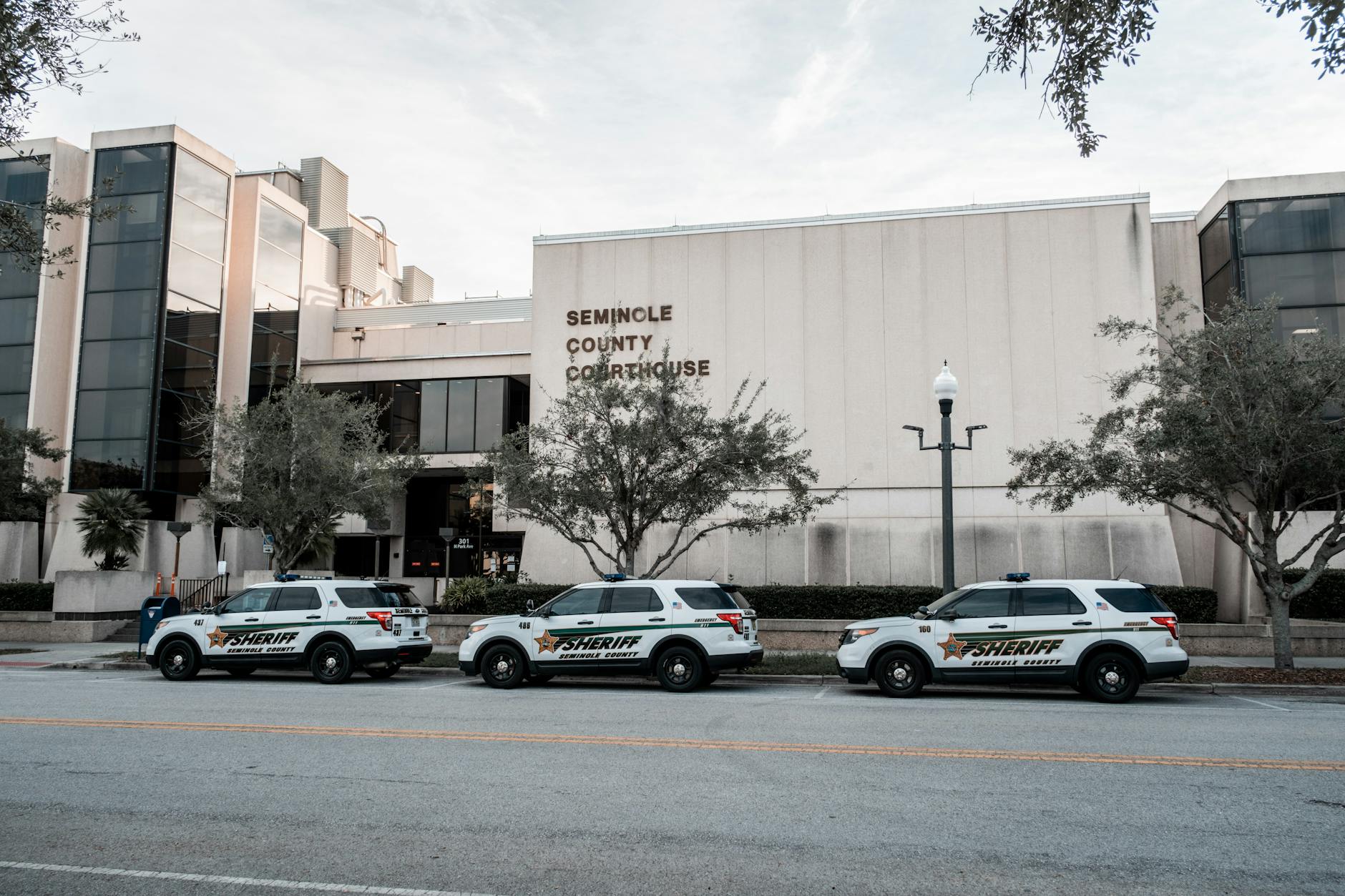
The white police cruiser idled at the curb on a residential street in Southeast Washington, D.C., its engine rumbling in the pre-dawn quiet of January 2025. Inside sat Charles Washington, Jr., 34 years old, already handcuffed. Officers had pulled him over for what they said was a traffic violation. What they found would send him back to federal court—not for drugs, not for violence, but for something far simpler: bullets.
Twelve rounds of ammunition. That’s all it took.
Washington wasn’t supposed to have them. As a previously convicted felon still serving probation, federal law prohibited him from possessing ammunition of any kind. The officers conducting the search knew this. Washington likely knew it too. But there the rounds were, discovered during a search of his person and vehicle, gleaming brass casings that would become Exhibit A in a case that would strip away nearly two and a half more years of his freedom.
By March 2026, Washington stood before a judge in U.S. District Court for the District of Columbia. The proceeding was brief, the outcome predetermined by the evidence and his criminal history. Twenty-seven months in federal prison. No parole in the federal system—he would serve nearly every day. The gavel came down on a case built on an undeniable fact: a man legally forbidden from touching ammunition had been caught with a dozen rounds.
It was a simple crime in a city plagued by gun violence, another data point in federal prosecutors’ efforts to keep weapons and ammunition out of the hands of those deemed too dangerous to possess them. But the simplicity of the charge masked a more complex story about second chances squandered, probation violated, and the unforgiving machinery of the federal criminal justice system.
The Weight of a Prior Conviction
Charles Washington, Jr. was no stranger to the criminal justice system by the time officers found those twelve rounds. Court documents confirm he carried the legal designation that would prove central to his case: previously convicted felon. The nature of that prior conviction remains unspecified in public records, but its consequences were absolute. Federal law, specifically 18 U.S.C. § 922(g), strips anyone convicted of a felony from possessing firearms or ammunition. The prohibition is categorical, unambiguous, and backed by significant prison time for violations.
Washington wasn’t merely living under this restriction—he was on probation when officers stopped him that January morning. Probation, in the federal system, means living under a microscope. Regular check-ins with a probation officer. Restrictions on travel, association, employment. Random searches. The understanding that any violation, no matter how minor it might seem to an ordinary citizen, could land you back before a judge.
For someone on federal probation, possession of ammunition isn’t a technical violation or a gray area. It’s a new federal crime, committed while still serving a sentence for a previous one. Prosecutors view such cases as betrayals of the leniency already extended. Judges tend to agree.
Washington lived in the District of Columbia, a city where gun violence has remained stubbornly persistent despite years of enforcement efforts and community intervention programs. In 2024 and 2025, the nation’s capital continued to grapple with homicide rates that, while down from pandemic-era peaks, remained elevated compared to the previous decade. Federal prosecutors, working alongside D.C.’s Metropolitan Police Department and the Bureau of Alcohol, Tobacco, Firearms and Explosives, had made illegal gun possession a priority.
The logic is straightforward: people with felony convictions have already demonstrated, in the government’s view, that they cannot be trusted with the tools of violence. Every round of ammunition in the wrong hands is a potential tragedy prevented. From this perspective, Washington’s dozen rounds weren’t just inert brass and lead—they were twelve opportunities for harm.
The Traffic Stop
The details of the traffic stop itself remain sparse in the public record, as is often the case with routine enforcement actions that lead to more serious charges. Officers pulled Washington over for what court documents describe only as a traffic violation. Whether it was a broken taillight, an expired registration, a failure to signal, or something more serious isn’t specified. What matters is what happened next.
In the District of Columbia, as in many American cities, a traffic stop is often merely the beginning. Officers approached the vehicle. They made contact with Washington. At some point—whether through plain view observation, consent to search, or probable cause developed during the encounter—they conducted a search.
They found ammunition. Twelve rounds. The documents don’t specify the caliber, the manufacturer, or whether the rounds were loose in a pocket or stored in a magazine or box. They don’t say whether Washington had a weapon to fire them, though possession of the gun itself would have constituted a separate, likely more serious charge. The absence of such a charge suggests he had ammunition but no firearm—a distinction that might seem meaningless to a layperson but matters in the federal criminal code.
For Washington, the discovery was catastrophic. Whatever the outcome of the traffic violation—a ticket, a warning, or nothing at all—it paled next to the federal charge he now faced. Officers placed him under arrest. The U.S. Attorney’s Office for the District of Columbia took the case. The machinery of federal prosecution began to turn.
The Federal Prohibition
To understand why twelve rounds could command 27 months in prison, one must understand the statutory framework that governs felon-in-possession cases. Section 922(g) of Title 18 of the U.S. Code makes it “unlawful for any person who has been convicted in any court of a crime punishable by imprisonment for a term exceeding one year” to possess “any firearm or ammunition.”
The language is sweeping. “Any person.” “Any court.” “Any firearm or ammunition.” Congress, when it drafted and amended this provision over the decades, intended no exceptions beyond those explicitly carved out in the statute itself. A felony conviction—with rare exceptions for very old convictions or those that have been formally expunged or pardoned—permanently revokes your Second Amendment rights under federal law.
The prohibition extends to ammunition separately from firearms. You don’t need to have a gun. You don’t need to be near a gun. You don’t need to have any intent to acquire a gun. Possession of ammunition alone violates the statute. The reasoning is that ammunition serves no lawful purpose for someone who cannot legally possess a firearm, and its presence suggests either current access to a weapon or intent to acquire one.
Federal prosecutors in Washington, D.C., and around the country treat these cases as priorities for several reasons. They’re relatively easy to prove—either the defendant is a felon and possessed ammunition, or they didn’t. They don’t require cooperating witnesses who might recant or complicated financial records that juries might struggle to understand. They remove from the streets individuals who, in the government’s assessment, pose a heightened risk of committing violent crime.
The sentences, while not as severe as those for drug trafficking or armed robbery, are substantial enough to serve as deterrents and to incapacitate offenders for meaningful periods. The U.S. Sentencing Guidelines, which federal judges consult when imposing sentences, recommend prison time for felon-in-possession cases, with the length depending on the defendant’s criminal history and other factors.
The Probation Violation
Washington’s case carried an aggravating factor that likely influenced his sentence: he committed this new crime while on probation for his previous felony conviction. In the federal system, probation is granted as an act of leniency. Instead of serving the full sentence behind bars, the defendant is released under supervision, allowed to live in the community under certain conditions.
Those conditions are extensive and strictly enforced. Defendants on federal probation must typically report regularly to a probation officer, submit to drug testing, maintain employment or actively seek it, avoid contact with known criminals, refrain from possessing weapons, and submit to searches of their person, vehicle, and residence without a warrant. The conditions are designed to monitor compliance with the law and to provide early intervention if the probationer begins to slide back into criminal activity.
Committing a new crime while on probation is perhaps the most serious violation possible. It demonstrates not just a failure to comply with the technical conditions of release, but an active return to criminal conduct despite the opportunity for redemption. Judges view such violations harshly. They suggest that the leniency extended was wasted, that the defendant cannot or will not conform to the law even under supervision.
When Washington appeared in court to face the ammunition charge, prosecutors could—and almost certainly did—point to his probation status as evidence that he posed a continuing danger and that a substantial prison sentence was warranted. The judge, in imposing 27 months, appeared to agree.
That sentence—two years and three months—exceeded the median for simple felon-in-possession cases in some jurisdictions, suggesting the judge may have considered Washington’s probation status and criminal history as aggravating factors. Federal judges have discretion within the guidelines to account for such circumstances. A defendant who commits a new gun crime while on probation for a previous felony conviction is precisely the kind of recidivist the statute is designed to incapacitate.
The Consequences
On March 9, 2026, U.S. District Court formalized Washington’s sentence: 27 months in federal prison. No parole exists in the federal system, eliminated by the Sentencing Reform Act of 1984. Washington would be eligible for a modest reduction in his sentence—typically up to 15 percent—for good behavior while incarcerated, but he would serve the vast majority of those 27 months behind bars.
The Bureau of Prisons would determine where he served his time. Federal inmates from the D.C. area are often sent to facilities in Pennsylvania, West Virginia, or North Carolina, sometimes hundreds of miles from family and community. The distance makes visits difficult, phone calls expensive, and reentry planning complicated.
Upon release, Washington would face supervised release, the federal system’s version of parole. He would return to many of the same conditions that governed his probation, this time with the knowledge that any violation could send him back to prison. He would be barred from possessing firearms or ammunition for life, absent a formal pardon or restoration of rights—a remedy so rare in practice as to be nearly theoretical.
His conviction would make employment more difficult. Background checks would reveal not just one felony but two. Housing in public or subsidized developments would likely be unavailable. Student loans, professional licenses, and other benefits accessible to ordinary citizens would remain out of reach. The collateral consequences of a federal felony conviction extend far beyond the prison sentence itself.
The Broader Context
Washington’s case is one of thousands prosecuted each year under federal felon-in-possession statutes. The U.S. Attorney’s Office for the District of Columbia, like its counterparts across the country, treats these cases as central to its public safety mission. In a city where gun violence remains a persistent concern, keeping weapons and ammunition out of the hands of convicted felons is seen as a straightforward, evidence-based intervention.
The data on recidivism among felons who illegally possess weapons supports this approach to some degree. Studies have found that individuals with prior felony convictions who are caught with guns have higher rates of subsequent violent crime than those without such convictions. From a utilitarian perspective, incapacitating these individuals prevents future harm.
Critics of aggressive felon-in-possession enforcement argue that the statutes are applied unevenly, with communities of color bearing a disproportionate burden. They point out that the prohibition is often permanent, offering no path to redemption even for individuals who committed nonviolent felonies decades earlier. They note that in a country with more guns than people, ammunition is ubiquitous, and its accidental or incidental possession can trigger severe penalties.
Some argue that resources spent prosecuting ammunition possession would be better directed at addressing the root causes of crime—poverty, lack of opportunity, untreated mental illness and addiction. They contend that the federal system’s severity, with its long sentences and lack of parole, makes reintegration harder and recidivism more likely, creating a cycle of incarceration that serves no one’s long-term interests.
But such policy debates were irrelevant in Washington’s case. He was a felon. He possessed ammunition. He was on probation when he did so. Under federal law, his guilt was a matter of simple fact. The only question was the length of his sentence.
The Unforgiving Math
Twelve rounds. Twenty-seven months. The arithmetic of federal gun prosecution is coldly precise. Each round of ammunition Washington possessed that January morning translated to more than two months in prison. By the time he walks free, years will have passed. The world he returns to will have moved on without him.
There’s a certain inexorability to cases like Washington’s. Once the ammunition was found, once his criminal history was confirmed, the outcome was foreordained. Federal prosecutors in the District of Columbia maintain conviction rates above 90 percent. Defendants who go to trial in felon-in-possession cases face even longer sentences if convicted, creating enormous pressure to plead guilty and accept the government’s offered sentence.
The plea agreement, if Washington entered one, would have been brief. A statement of facts, an acknowledgment of guilt, a recommendation on sentencing. His attorney would have explained that fighting the case meant risking a trial penalty—the significantly longer sentence judges often impose after trial compared to after a guilty plea. The calculation is brutally simple: plead guilty and get 27 months, or roll the dice at trial and potentially face four or five years.
Most defendants in Washington’s position take the plea. The evidence is usually overwhelming. The law is clear. The judge has heard dozens of identical cases and is unlikely to be moved by arguments about unfairness or the need for a second chance. The system is designed to process these cases efficiently, to remove illegal guns and ammunition from the streets, and to punish those who violate the prohibition.
What Remains Unsaid
The press release from the Department of Justice announcing Washington’s sentence runs fewer than 200 words. It provides his name, age, the crime, and the sentence. It does not explain what led to the traffic stop. It does not describe his prior felony or how long ago it occurred. It does not mention whether he has children, whether he was employed, whether anyone spoke on his behalf at sentencing.
These omissions are typical. Federal press releases focus on the facts necessary to demonstrate that justice was done: crime committed, defendant prosecuted, sentence imposed. The human context—the circumstances that led a man to possess ammunition while on probation, the consequences for his family, the likelihood he will reoffend after release—is absent.
We don’t know if Washington claimed the ammunition belonged to someone else, or if he admitted it was his. We don’t know if he expressed remorse or maintained he did nothing wrong. We don’t know if the judge struggled with the sentence or imposed it without hesitation. The public record, like the press release, provides only the skeletal facts of crime and punishment.
What we know is this: Charles Washington, Jr., will spend more than two years in federal prison for possessing twelve rounds of ammunition. When he emerges, he will carry two felony convictions, a record of probation violation, and the permanent stigma of a federal prison sentence. The ammunition itself will have long since been destroyed, catalogued as evidence and then disposed of according to protocol.
The rounds were never fired. No one was hurt by them. But under the law’s logic, their mere presence in Washington’s possession was harm enough. The potential for violence, the violation of trust, the demonstrated inability to follow the conditions of probation—these abstractions translated into 27 months of concrete, physical incarceration.
In a downtown federal building in Washington, D.C., filing cabinets hold thousands of case files like Washington’s. Each one tells a similar story: a defendant with a criminal history, caught with a gun or ammunition, sentenced to prison, released under supervision, then often caught again years later in an endless cycle. The files accumulate, the press releases are issued, and the machinery continues its work.
On some residential street in Southeast Washington, life goes on. The spot where Washington’s vehicle was pulled over that January morning looks like any other stretch of pavement. There’s no marker, no indication that a man’s freedom ended there over a dozen brass rounds. The city moves forward, grappling with the same challenges that necessitate aggressive prosecution of felon-in-possession cases while simultaneously questioning whether such prosecutions solve anything or merely feed the cycle.
Washington’s story is both exceptional—not everyone on probation is caught with ammunition—and utterly ordinary within the federal criminal justice system. The sentence he received falls within normal ranges. The statute under which he was prosecuted is settled law, challenged occasionally on Second Amendment grounds but consistently upheld by courts. The process that took him from traffic stop to federal prison was entirely routine.
And that, perhaps, is the most striking thing about the case. In its very ordinariness, in its bureaucratic efficiency, in the yawning gap between the twelve rounds and the 27 months, it reveals something about how justice operates when it becomes mechanical. The law was followed. A sentence was imposed. A press release was issued. And somewhere, a man began counting down the days until his release, one for every week those dozen rounds cost him.